AI-Powered Transportation Optimization

Smarter mobility. Faster iteration. Better outcomes.

Hypercommute is the optimization engine behind next-generation mobility — powering demand-responsive transit, first-mile/last-mile, microtransit, youth electric mobility, logistics, and event transportation with real-time routing, AI-driven service tuning, and distributed-scale decisioning.

AIDynamic routing, trip matching & demand forecasting
Real TimeContinuous tuning of zones, hours, fleet and service rules
ScalableDistributed architecture built for high-volume operations
FlexibleTransit, microtransit, logistics, events and fleet ops
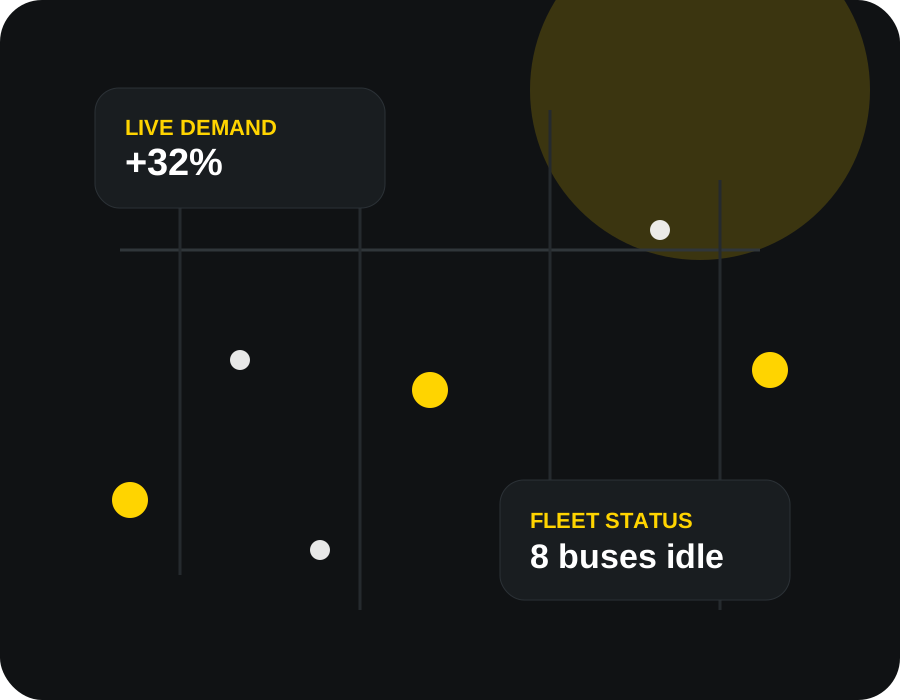
Demand Wave Peak transfer priority active
AI Tuning Zones, fleet & SLA continuously calibrated
Use Cases Transit • Logistics • Events • Fleets

The system is rigid. Demand is dynamic.

Fixed-route systems are expensive to run and slow to adapt. Many microtransit pilots fail not because the concept is wrong, but because the service is designed once and rarely tuned. Hypercommute changes that. We help operators launch faster, learn continuously, and adapt service models to real-world demand.

Outdated planning cycles

Static planning can’t keep pace with shifting rider demand, weather, disruptions, and new mobility patterns.

🚌

Underutilized service

Empty vehicles, long waits, and misaligned service windows drive cost up and rider confidence down.

🔗

Poor network integration

On-demand services often underperform when they are not tightly connected to fixed-route transit.

📉

Slow iteration

Without live intelligence and scenario tools, agencies cannot quickly test and refine what works.

An AI-powered optimization platform built for living systems

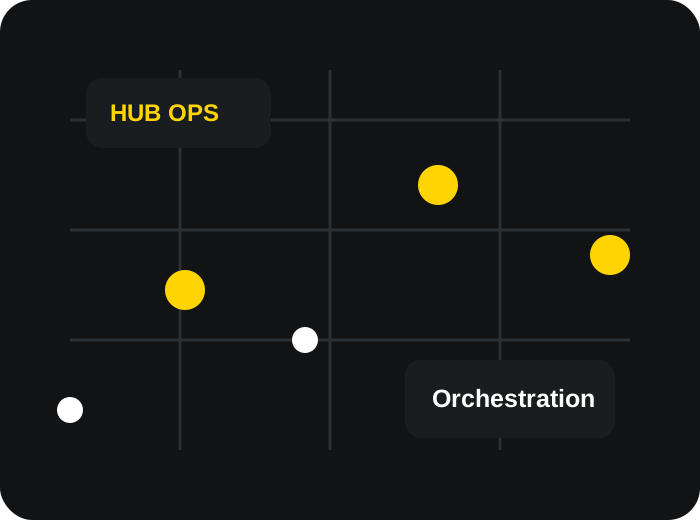
Hypercommute is not a static scheduling tool. It is a configurable optimization platform that ingests real-time and historical data, simulates service scenarios, orchestrates live operations, and continuously feeds performance data back into the planning loop.

Dynamic Trip Matching Continuously groups riders, trips, and resources based on actual demand and configurable service goals.
Real-Time Route Optimization Rebalances routes, fleets, and dispatch logic as conditions change on the ground.
Distributed Computing Processes high-volume event streams and optimization workloads in a scalable, low-latency architecture.
Continuous Learning Uses operational history, rider preferences, and behavior signals to improve service performance over time.

One optimization core. Multiple high-value applications.

Hypercommute’s underlying intelligence extends across sectors where dynamic routing, service tuning, and operational orchestration matter.

Transit & Microtransit

Demand-responsive transit, first-mile/last-mile, hybrid fixed-route + on-demand service, rural coverage, and low-density network design.

  • Integrated with existing fixed-route systems
  • Peak-hour transfer optimization
  • Faster service model refinement

Youth & Group Mobility

Dynamic, app-based transportation for youth field trips, community programs, and group-based mobility services.

  • Booking, dispatch & real-time fleet management
  • Iterative pilot → refine → scale model
  • Electric mobility aligned with clean transport goals

Logistics & Fleet Operations

Route orchestration, priority scheduling, dynamic insertions, last-minute changes, and intelligent fleet balancing.

  • Multi-constraint optimization
  • Real-time dispatch decisions
  • Improved SLA adherence and utilization

Events & Mega Venues

AI-powered orchestration for shuttles, park-and-ride, VIP movements, ADA transport, and surge departures at major events.

  • Scenario rehearsal before event day
  • Live fleet rebalancing during demand spikes
  • Safer, smoother post-event egress

Proven in the field. Designed to scale.

Tconnect — Tompkins County, NY

In partnership with TCAT, Gadabout, and Way2Go, Hypercommute powered an NYSERDA-backed first-mile/last-mile service in Tompkins County. The deployment reinforced three critical lessons: iteration is essential, hybrid service models outperform rigid assumptions, and on-demand must be deeply integrated with fixed-route transit.

During pandemic disruption, when old planning data quickly became less predictive, the team adapted service design using a faster, data-informed iteration cycle.

YOOTS — Youth Electric Mobility

Hypercommute supported the design and deployment of an on-demand electric bus service for youth field trips and group mobility in Oakland and Richmond. The service evolved from a static scheduling concept into a dynamic, app-based operational system optimized for real-world group transport.

The model combined technology, operations, partnerships, and economics from day one to create a service that was not only fundable — but operationally sustainable.

Microtransit succeeds when it is treated as a living system — not a one-time launch.

The fastest way to improve outcomes is to shorten the distance between observation and action. Hypercommute gives planners and operators the intelligence to evaluate multiple service models, adjust key parameters quickly, and continuously calibrate toward better utilization and rider experience.

Evaluate different service models Test geographies, hours, fleet sizes, response-time targets, and transfer logic before or during operations.
Use richer data sources Combine operational history with app-based surveys, rider behavior, and broader mobility signals such as cell-phone-derived movement data.
Calibrate continuously Fine-tune walking distance, wait time, cancellations, SLAs, empty miles, and resource distribution based on recent ground truth.

What robust on-demand systems require

⚙️

Easy launch and adoption

Rapid deployment across geographies, populations, and operating environments with low-friction integration into existing networks.

🧠

Built-in intelligence

Continuous optimization that helps planners move beyond rigid assumptions and operate from live, data-backed decisions.

🌦️

Elastic service behavior

Adaptation to demand swings, weather, disruptions, seasonal patterns, and changing customer preferences without rebuilding the system.

How Hypercommute works in practice

1Launch fast

Stand up a minimal viable service connected to the broader network.

2Capture ground truth

Record requests, wait times, cancellations, empty miles, preferences, and performance.

3Tune intelligently

Adjust geography, hours, rules, SLA targets, and fleet behavior using AI-backed insight.

4Scale what works

Expand the model with confidence once the service economics and rider experience improve.

Bring AI-powered transportation intelligence to your network

Whether you are a transit agency, mobility platform, event operator, city partner, or strategic acquirer, Hypercommute offers a proven foundation for smarter routing, faster iteration, and more adaptive service design.